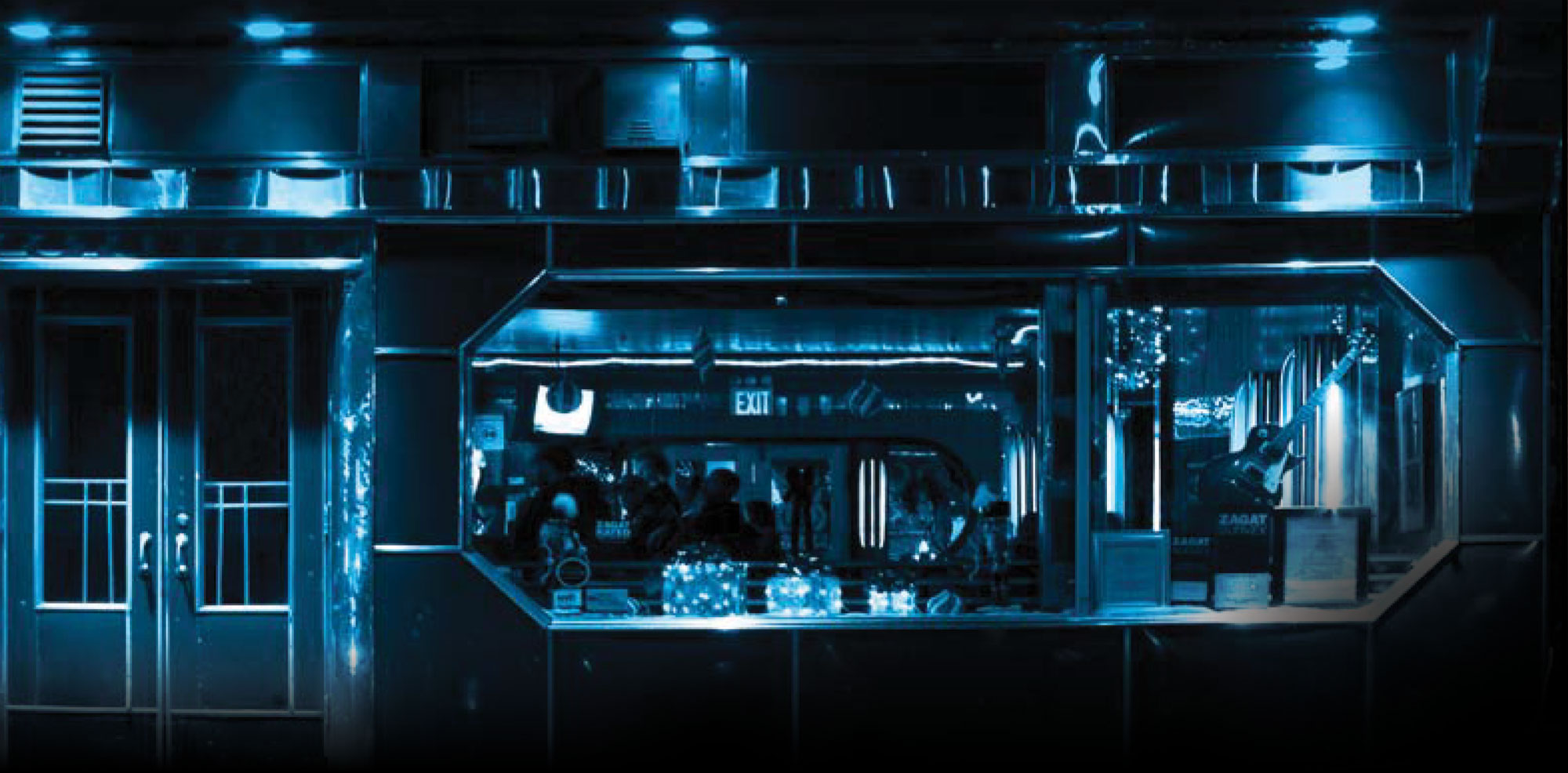

Jazz Sanctuaries is a collaborative effort among the following presenters:
THEATER
The Apollo Theater stands as one of the most enduring and influential cultural landmarks in Harlem, New York City, and the United States. Since launching its first Amateur Night competition in 1934, the theater has played a pivotal role in discovering and nurturing talent while shaping the evolution of musical genres such as jazz, swing, bebop, R&B, gospel, blues, soul, and hip-hop. Throughout its history, the Apollo has remained a vital champion of jazz and its performers. From the landmark evening when Ella Fitzgerald first won Amateur Night in 1934 to appearances by legends like Benny Carter, Julian “Cannonball” Adderley, Louis Armstrong, Count Basie, Billie Holiday, and Cab Calloway, the roster of great artists who have graced its stage is remarkable. Today, the Apollo’s renewed vision continues to be guided by music and grounded in its rich legacy, supporting artists and curators who are African American, culturally diverse, and at various stages of their careers—from emerging talents to established figures. The theater remains committed to presenting historically significant works alongside innovative contemporary performances.
STAGE
Over the past three decades, Harlem Stage has grown into one of the nation’s leading arts institutions. It has earned this reputation by commissioning and presenting bold, timely, and socially relevant performances by artists of color, connecting their work with engaged audiences in the communities it serves. The organization has a long history of supporting influential creators from around the neighborhood and across the world, including legends such as Harry Belafonte, Max Roach, Sekou Sundiata, Abbey Lincoln, Sonia Sanchez, Eddie Palmieri, and Tito Puente, as well as contemporary voices like Bill T. Jones, Vijay Iyer, Mike Ladd, Tania León, Carl Hancock Rux, Nora Chipaumire, and Jason Moran.
Each year, Harlem Stage’s educational initiatives introduce more than 10,000 New York City children to the richness of diverse cultures through the performing arts. In 2006, the organization inaugurated the landmark, award-winning Harlem Stage Gatehouse, transforming a once-abandoned structure—originally used to supply fresh water to New York City—into a vibrant hub of creativity, ideas, and cultural expression.
JAZZMOBILE
Jazzmobile, Inc., the oldest nonprofit arts organization in the United States devoted exclusively to jazz, was established in 1964 by NEA Jazz Master Dr. Billy Taylor and Daphne Arnstein. Its mission is to present, preserve, promote, and advance jazz—often described as “America’s classical music.” The organization pioneered innovative programs such as jazz lecture-demonstrations and mobile performances staged throughout New York City, and it continues to serve as a model for other jazz-focused presentation organizations nationwide.
Each year, Jazzmobile reaches roughly 50,000 New Yorkers from diverse ethnic backgrounds, age groups, and socioeconomic communities, including individuals with disabilities. To ensure broad access, most of its programming is offered free or at minimal cost. In addition to concerts, Jazzmobile provides educational outreach through workshops, panel discussions, and symposia that place jazz within its historical context and highlight its lasting importance to American culture.
ABOUT COLUMBIA UNIVERSITY IN THE CITY OF NEW YORK
A leading academic and research university, Columbia continually seeks to advance the frontiers of knowledge and to foster a campus community deeply engaged in understanding and addressing the complex global issues of our time. Columbia’s extensive public service initiatives, cultural collaborations, and community partnerships help define the University’s underlying values and mission to educate students to be both leading scholars and informed, engaged citizens. Founded in 1754 as King’s College, Columbia University in the City of New York is the fifth oldest institution of higher learning in the United States.
Support for the University’s involvement in a project such as the Jazz Sanctuaries is provided by the following schools and programs: Miller Theatre at Columbia University School of the Arts, the Center for Jazz Studies, Department of Art History and Archaeology, Institute for Religion, Culture & Public Life, Institute for Research in African-American Studies, Office of Government & Community Affairs and Office of Community Outreach at Columbia University School of the Arts. To learn more, visit www.columbia.edu.