
HISTORIC VENUES
THE ALHAMBRA BALLROOM traces its roots back to 1905, when it was first constructed as the Alhambra Theater. Initially, it functioned as a vaudeville house and later transitioned into a movie venue. In 1926, an upstairs ballroom was added, quickly becoming a stage for iconic performers such as Bessie Smith, Jelly Roll Morton, Frankie Manning, and even a young singing waitress named Billie Holiday. With live swing bands regularly playing, the venue grew into one of the nation’s most celebrated dance halls. At the peak of its popularity, legendary artists like Cab Calloway, Duke Ellington, and Count Basie filled the stage with the powerful sounds of their big bands, inspiring thrilling swing dance showdowns on the floor.
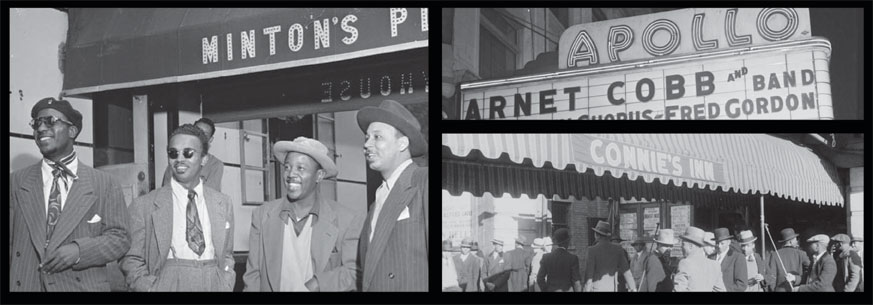
THE APOLLO THEATER stands as one of the most legendary and lasting cultural landmarks in Harlem, New York City, and the United States as a whole. Its storied history includes the famous evening in 1934 when Ella Fitzgerald won Amateur Night, launching her remarkable career. Over the years, the Apollo’s stage has hosted an extraordinary roster of jazz legends, including Benny Carter, Julian “Cannonball” Adderley, Louis Armstrong, Count Basie, Billie Holiday, and Cab Calloway—just a few among the many great artists who have performed there.
CLUB , a now largely forgotten jazz spot on 145th Street, was where Cecil Taylor first gained experience performing live. He later recalled those early days with a mix of humor and respect: playing marathon sets from 9 p.m. until 4 a.m., allowed only a single 15-minute break. The upright piano was in rough shape, sometimes with only eight functioning keys, and the pay was just $50 a week. This was back in 1952. Taylor was required to play popular standards rather than his own compositions, and he noted that many musicians could perform those tunes in any key. Despite the tough conditions, it was a coveted proving ground where everyone competed for the chance to play.
HAVANA SAN JUAN was a vibrant nightclub that emerged during the energetic cultural surge of the 1960s. Situated at 138th Street and Broadway, it became a gathering place for renowned performers including Machito, Sammy Davis Jr., Celia Cruz, Frank Sinatra, and Tito Puente. The club’s dynamic atmosphere helped shape what later became known as “classic salsa,” a genre of music and dance that has bridged cultures across generations and secured a lasting influence on American musical history.
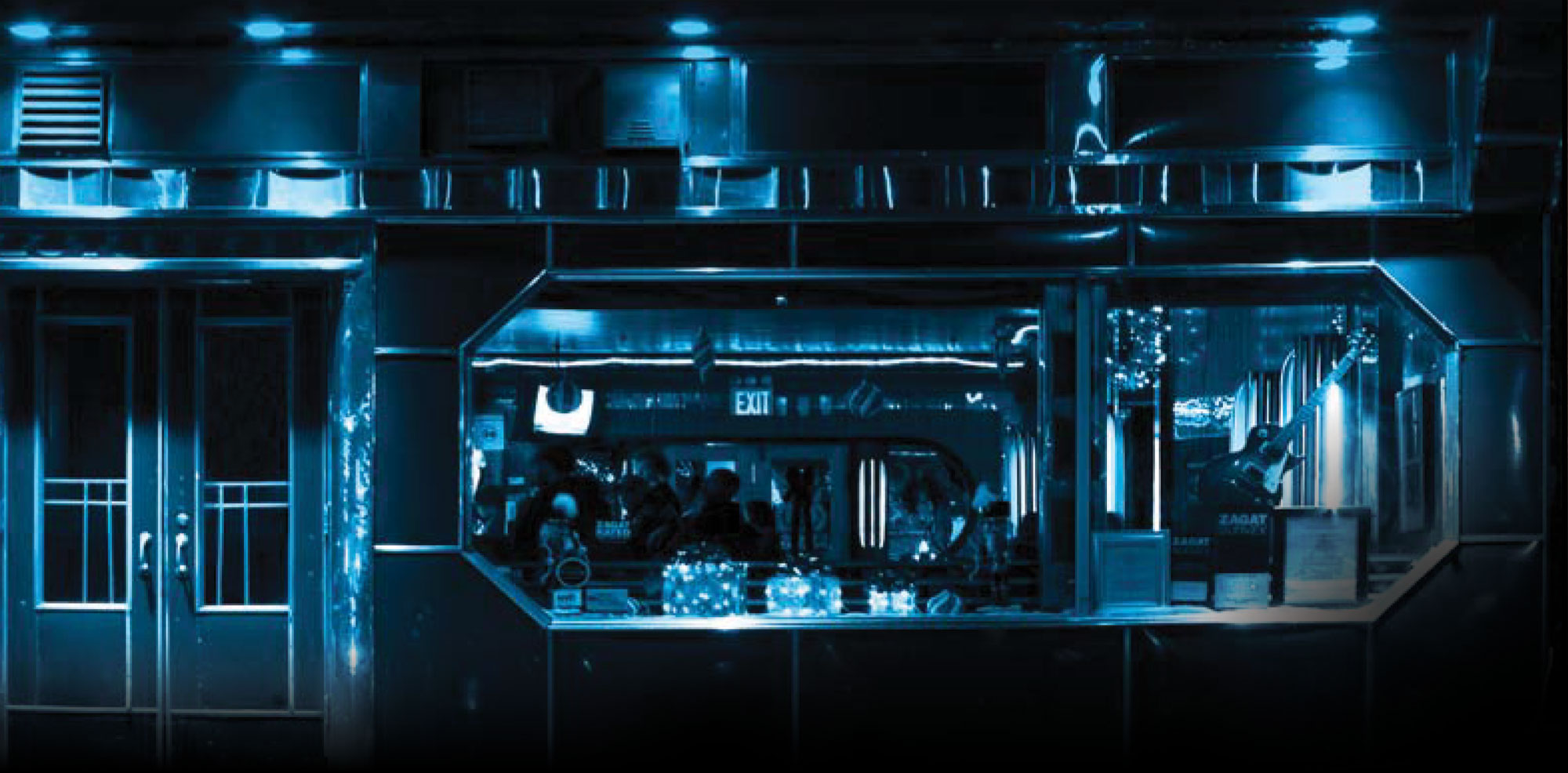
LENOX LOUNGE, renowned for its iconic Zebra Room, welcomed jazz enthusiasts from its opening in 1939. The venue quickly became a magnet for legendary jazz musicians and also served as a beloved gathering spot for prominent Harlem Renaissance writers, including James Baldwin and Langston Hughes. Over the years, Lenox Lounge and its distinctive Zebra Room have frequently appeared as stylish backdrops in music videos and album visuals for artists such as Luther Vandross, Janet Jackson, Madonna, Keith Sweat, P. Diddy, and on a Quincy Jones album cover, among others.
MINTON’S PLAYHOUSE gained legendary status in the early 1940s for its electrifying jam sessions, where innovators like Thelonious Monk, Kenny Clarke, Charlie Parker, and Dizzy Gillespie experimented boldly and helped give birth to bebop. The club was also known for its intense “cutting sessions,” fierce musical showdowns in which virtuosos—such as trumpeters Roy Eldridge and Dizzy Gillespie or saxophone greats Lester Young and Ben Webster—challenged each other in unforgettable battles of skill and creativity.
CLARK MONROE’S UPTOWN HOUSE often referred to simply as Monroe’s—was a prominent New York City nightclub that played a key role in the early development of bebop jazz. Together with Minton’s Playhouse, it stood as one of the two main venues where the style first took shape, serving as a gathering place for musicians eager to experiment with new, more complex forms of jazz.
Clark Monroe established Uptown House in the 1930s at 198 West 134th Street in Harlem. The venue occupied a building that had previously housed Barron’s Club—where Duke Ellington performed in the early 1920s—as well as the Theatrical Grill. From the late 1930’s, the club presented swing jazz and Billie Holiday held a residence there for three months in 1937. In the early 1940’s the club became known for its jam sessions, where many of the players involved in the birth of bebop played together. Al Tinney led Monroe’s house band, which included Max Roach, Little Benny Harris, George Treadwell, and Victor Coulsen. Charlie Parker was a featured soloist at the club in 1943.
A notable live recording by Charlie Christian captures a famous jam session held at Monroe’s. In 1943, Monroe relocated the club to 52nd Street, and a year later, in December 1944, he launched a second venue called The Spotlite.
PARK PALACE was the upstairs dance hall of a two-part venue that also included a downstairs nightclub known as the Park Plaza, located at the northwest corner of 110th Street and Fifth Avenue. Together, the dance hall and nightclub became a major destination in New York City for enthusiasts of Latin dance music. On any given night, visitors could expect performances by some of the finest musicians and vocalists from Cuba and Puerto Rico, providing vibrant music for East Harlem’s community of Latin dancers and devoted fans.
SHOWMAN’S JAZZ CLUB was once a favorite gathering spot for Apollo Theater performers more than sixty years ago, when it stood just steps away from the legendary venue. In 1988, the club relocated to its current home on 125th Street, where its cozy atmosphere continues to make it one of Harlem’s leading jazz destinations. Above the well-known bar, a gallery of glowing photographs honors legends such as Sarah Vaughan, Lionel Hampton, Pearl Bailey, Eartha Kitt, and Duke Ellington.
SMALL’S PARADISE captured the vibrant spirit of Harlem nightlife during the Roaring Twenties. Renowned for its top-tier musical performances, lavish floor shows, dancing waiters, and notably integrated crowds, the club stood out as a lively social hub of the era. Guests often squeezed onto its tiny dance floor while waiters, performing the Charleston as they moved between tables, served Chinese dishes and bootleg liquor. Among those waiters was Malcolm Little—later known as Malcolm X—who worked at Small’s in 1943 before rising to prominence.
The Sugar Cane Club was a cabaret located at 135th Street and Fifth Avenue, on the edge of Harlem’s less affluent neighborhoods. During the 1920s and 1930s, it became part of the vibrant cultural scene of the Harlem Renaissance, bringing together African American jazz performers and a mixed audience of both Black and white patrons. Although it lacked the upscale exclusivity of the segregated Cotton Club, which catered primarily to wealthy white clientele, the Sugar Cane Club still attracted visitors from across New York City while remaining rooted in its largely African American community. During Prohibition, it operated both as a nightclub and a speakeasy, adding to its lively and somewhat clandestine appeal.
The Sugar Cane Club was a relatively small venue that, despite its limited size, regularly drew large crowds. It hosted many celebrated African American jazz artists, including Bessie Smith, Ethel Waters, Duke Ellington, and Louis Armstrong. Like numerous other Harlem nightclubs, however, its success declined sharply with the end of Prohibition and the onset of the Great Depression, both of which had a significant impact on its business.